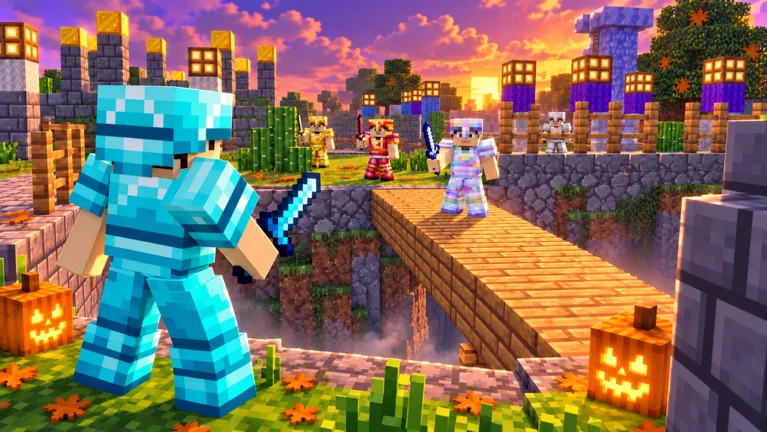
- 1 Upgrade Per Kill progression guide: Build equipment one elimination at a time, then protect the run.
- Core rule: Each kill advances your gear, while death resets the upgrades earned during that run.
- Best opening: Choose a clear class, isolate targets, and avoid crowded fights during early progression.
- Late-run priority: Protect Ruby, Shadow, Prism, and MAXED progress instead of forcing low-value chases.
- Key resource: Treat Gear Saver as risk management for valuable streaks, not as a solution to poor positioning.
1 Upgrade Per Kill Progression Basics
This 1 Upgrade Per Kill progression guide focuses on the central PvP loop: enter the arena, secure an elimination, improve your equipment, and decide whether the next fight is worth the risk. The game’s progression is temporary during a run, so every upgrade increases both your combat potential and the cost of making a mistake.
The safest players do not treat every nearby opponent as an automatic target. They check health, positioning, escape routes, and nearby threats before committing. A successful run is built from repeatable fights rather than one reckless attack against the strongest player in the arena.
| Core Mechanic | What It Does | Best Response |
|---|---|---|
| Kill-based upgrades | Each successful elimination advances current equipment. | Choose favorable targets and reassess after every kill. |
| Death reset | Death removes the upgrades gained during the current run. | Keep an escape route and avoid unnecessary trades. |
| Class system | Classes shape range, mobility, pressure, and utility. | Use a class that matches your preferred engagement distance. |
| Combat interactions | Crits, knockback, armor, and positioning affect fights. | Respect arena edges and avoid predictable approaches. |
Build
- Secure isolated eliminations
- Upgrade after each successful fight
- Keep your movement unpredictable
Evaluate
- Check health before re-engaging
- Watch for third-party attackers
- Compare reward against death risk
Protect
- Retreat from losing fights
- Avoid crowded arena routes
- Preserve high-tier progression
After every kill, pause long enough to identify nearby threats. A short reposition can protect more progress than immediately chasing another target.
The official 1 Upgrade Per Kill Roblox game page is the best place to confirm current game access, visible systems, and live updates.
Step-by-Step Route from Spawn to First Upgrade
A reliable opening reduces avoidable deaths. Begin by learning the lobby layout, selecting a class with a straightforward role, and entering the arena with a specific target-selection plan. The first kill is important, but surviving afterward is what turns that kill into meaningful progression.
Review the Lobby and Class Options
Identify where classes, equipment progression, and arena access are located. Select a class that fits your preferred range. Warrior is a simple direct-combat choice, while Archer rewards spacing and controlled positioning.
Enter with a Safe First-Fight Goal
Do not search for the strongest player immediately. Look for an isolated opponent, a weakened target, or a player already committed to another fight. Keep cover and an escape route nearby.
Secure the First Elimination
Use movement and terrain to limit incoming pressure. Avoid chasing a target through an exposed area if another player could interrupt the fight. A clean finish is more valuable than unnecessary damage against multiple opponents.
Reassess After the Upgrade
Once the kill advances your equipment, check health, enemy locations, and available retreat routes. Do not assume the next fight has the same risk as the first one.
Repeat Only Favorable Engagements
Continue rotating through the arena and select fights that match your class strengths. If the fight becomes crowded, disengage and search for a better opening.
| Stage | Main Objective | Common Mistake | Safer Decision |
|---|---|---|---|
| Spawn | Choose a class and understand your route. | Entering combat without checking the area. | Observe nearby players before committing. |
| First engagement | Find an isolated or weakened target. | Attacking a group for a low-value opportunity. | Wait for separation or third-party distraction. |
| After one kill | Protect the first equipment upgrade. | Immediately starting another risky chase. | Reposition, recover, and scan for threats. |
| Early streak | Build repeatable progress. | Assuming stronger gear makes every fight safe. | Keep using cover and preserve an escape route. |
The strongest beginner habit is simple: take one safe fight, reassess the arena, then choose the next engagement deliberately.
Classes and Upgrade Tiers for PvP Decisions
Class selection changes how you obtain kills, while equipment tiers change how carefully you should protect them. There is no single choice that dominates every encounter. Direct fighters can be easier to learn, ranged classes can punish exposed targets, and utility classes become stronger when you understand terrain and timing.
| Class | Role | Best Use | Main Limitation |
|---|---|---|---|
| Warrior | Direct melee | Clear one-on-one pressure and beginner-friendly fights. | Needs a safe approach against ranged opponents. |
| Archer | Ranged pressure | Spacing, finishing weakened targets, and terrain control. | Less forgiving when cornered. |
| Skirmisher | Mobile fighter | Short exchanges, pursuit, and quick disengagements. | Requires strong movement control. |
| Trapper | Ambush control | Predictable routes, corners, and defensive positions. | Less effective in open areas. |
| Firestarter | Area pressure | Forcing opponents away from safe positions. | Needs accurate placement and timing. |
| Trickster | Deception | Surprising distracted players and disrupting pursuit. | More difficult to use consistently. |
| Bomber | Burst area damage | Ambushes, narrow routes, and clustered enemies. | Can be inconsistent in open fights. |
| Scorcher | Close-range pressure | Tight spaces and aggressive close engagements. | Risky while closing distance. |
The visible upgrade route runs from Leather through Copper, Iron, Full Diamond, Ruby, Shadow, Prism, and MAXED. Early tiers are useful for learning the arena. Late tiers demand more patience because death removes a much larger amount of accumulated progress.
| Upgrade Tier | Run Value | Recommended Mindset |
|---|---|---|
| Leather | Starting state for testing routes and matchups. | Learn movement and seek low-risk opportunities. |
| Copper | Early advantage over unupgraded players. | Take favorable fights without forcing a chase. |
| Iron | More dependable combat baseline. | Expect greater attention from other players. |
| Full Diamond | Strong mid-run combat breakpoint. | Stop taking low-value fights. |
| Ruby | High-value progression with stronger pressure. | Keep moving and avoid predictable routes. |
| Shadow | Late-run advantage that attracts threats. | Prioritize information and controlled finishes. |
| Prism | Elite progression worth protecting carefully. | Fight only when the matchup is favorable. |
| MAXED | Highest listed progression state. | Preserve the run instead of chasing unnecessary kills. |
Higher equipment does not remove combat risk. It makes poor target selection more expensive because a death resets the progress you spent multiple eliminations building.
New Players
Start with a clear role such as Warrior or Archer and focus on positioning.
Mobile Players
Use Skirmisher to create short exchanges and safer disengagements.
Strategic Players
Trapper and Firestarter reward control over where fights happen.
Experienced Players
Trickster, Bomber, and Scorcher gain value through timing and prediction.
Gear Saver, Perks, and Resource Management
Progression systems should support your risk plan rather than encourage reckless fights. Gear Saver is most valuable when losing would erase a long streak or high-level equipment. At low progression, replacing basic gear may be less costly than consuming protection.
Perks and Enchants should also match your current weakness. New players generally benefit from reliable survival effects, while experienced players can gain more from offensive options when they already understand spacing, timing, and retreat windows.
| System | Best Timing | Practical Use |
|---|---|---|
| Gear Saver | High upgrade level or long streak. | Protect valuable progression when death would be costly. |
| Survival Perks | Learning phase and streak protection. | Reduce the impact of mistakes and support safer retreats. |
| Offensive Enchants | Consistent duelists with reliable positioning. | Finish vulnerable targets before they can escape. |
| Balanced setup | Mixed fights and uncertain matchups. | Combine dependable defense with practical combat pressure. |
| Gold | Regular progression and core upgrades. | Prioritize improvements that increase survival or earning potential. |
| Emeralds | Rare or high-value purchases. | Save for options that remain useful across several fights. |
Before Committing to a Risky Fight:
- Check current health and nearby opponents
- Confirm that an escape route remains available
- Compare the target reward with the value of your current streak
- Decide whether Gear Saver is worth using at this progression tier
- Disengage if the fight becomes crowded or unpredictable
Save rare resources for upgrades that improve several future fights. Convenience spending is less valuable when it delays a survival tool or meaningful progression benefit.
A strong resource routine is to earn through normal kills, assists, bounties, quests, and online rewards while avoiding unnecessary shop spending. The goal is not to spend quickly; it is to convert resources into more consistent future runs.
Streaks, Bounties, and PvP Checklist
Bounties and leaderboard progress reward efficient decision-making. The best target is not always the player with the highest visible upgrade. Favor opponents who are isolated, damaged, distracted, or exposed to a controlled approach.
Use the arena edge carefully. Knockback can create a strong finishing opportunity, but standing too close to the boundary can remove your own escape options. Low health should also change your objective from dealing damage to preserving the run.
| Situation | Recommended Action | Reason |
|---|---|---|
| Target is isolated | Approach with an escape route. | Reduces the chance of third-party interference. |
| Target is already fighting | Wait for a safe finishing window. | Conserves health and avoids starting a full trade. |
| You are low health | Break pursuit and move away from the edge. | Preserves upgrades instead of risking a reset. |
| You reach Prism or MAXED | Take only high-confidence engagements. | Late-run progress has a high opportunity cost. |
| A bounty is far away | Skip it if the route is exposed. | The reward may not justify the travel and ambush risk. |
| You are being chased | Use cover, corners, and route changes. | Forces the opponent to commit before you counterattack. |
A long streak is built by surviving the fights you do not need to take. Target selection and retreat timing matter as much as attack accuracy.
Q: What is the main rule in 1 Upgrade Per Kill?
Each successful kill advances your current equipment, while death resets the upgrades gained during that run. Build progress through favorable fights and protect it after every elimination.
Q: Which class is best for beginners?
Warrior is a straightforward choice for direct combat, while Archer suits players who prefer distance and controlled positioning. The best option depends on the range and pace you can manage consistently.
Q: When should I use Gear Saver?
Gear Saver is most valuable when you have a high upgrade tier, a long kill streak, or progress that would take significant time to rebuild. It is usually less urgent for basic early equipment.
Q: How do I reach Prism or MAXED more reliably?
Choose isolated targets, avoid crowded fights, use an escape route, and reassess after each kill. At higher tiers, prioritize protecting progress over chasing every available opponent.
The official Block PvP Roblox community is also worth checking for announcements connected with the game. Recheck official pages on October 26, 2026, or after major updates before relying on visible systems or progression details.