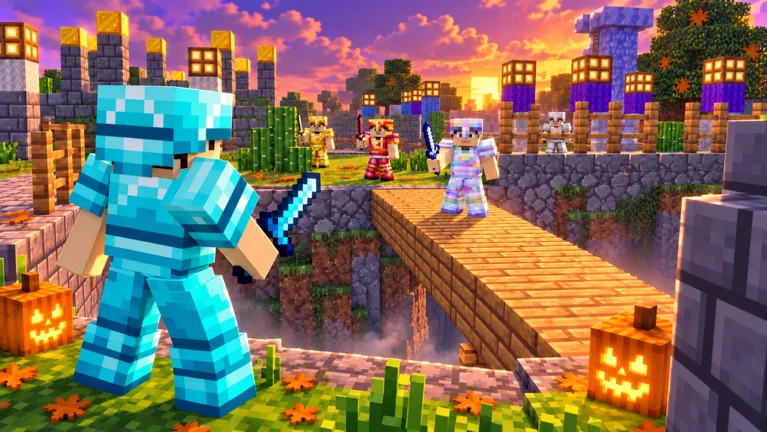
- 1 Upgrade Per Kill beginner guide: Build equipment through eliminations while protecting your current run.
- Core risk: Dying resets the upgrades gained during that run.
- Best opening: Choose a straightforward class and look for isolated opponents.
- Main habit: Reassess every fight after gaining a new equipment tier.
- Long-run goal: Reach stronger tiers without trading valuable progress for low-probability fights.
1 Upgrade Per Kill Beginner Guide: Core Loop
1 Upgrade Per Kill is a Roblox free-for-all PvP arena built around a simple but demanding loop: each successful elimination improves your equipment, while death resets the upgrades gained during the current run. The safest way to learn is to treat every kill as progress that must be protected, not as permission to chase the next opponent immediately.
Start by exploring the lobby and identifying the class selection, upgrade, and arena entry areas. Before entering combat, understand your class role and decide whether you want direct melee pressure, ranged attacks, mobility, ambushes, or area control.
| Match phase | Primary goal | Recommended behavior |
|---|---|---|
| Lobby | Prepare your first run | Review class choices and identify where progression options are located |
| First engagement | Secure a manageable elimination | Target isolated players and avoid crowded fights |
| Early upgrades | Establish an advantage | Reassess matchups instead of forcing another attack |
| Mid-run | Protect accumulated progress | Use cover, escape routes, and controlled engagements |
| High tier | Convert advantage safely | Choose high-confidence fights and disengage quickly when conditions change |
Learn the Arena
Identify open areas, corners, entrances, and routes that can become dangerous during a retreat.
Start with Clarity
Select a class with an obvious role so you can focus on movement, spacing, and target selection.
Protect Each Kill
An elimination creates progress, but the next fight should be chosen based on risk rather than momentum.
Your first objective is not the highest-tier opponent. It is completing a safe first elimination while keeping a clear escape route.
Step-by-Step First Match Route
Follow this route during your first several matches. It focuses on learning the upgrade loop while reducing avoidable deaths.
Enter the lobby and review your options
Check the available class choices and identify where you can enter the combat arena. Use the lobby to understand the basic flow before rushing into a fight.
Choose a simple combat role
Warrior is a straightforward starting point for direct engagements. Archer suits players who prefer distance, while Skirmisher rewards movement and short exchanges. Select one role and learn its strengths before changing styles.
Find an isolated target
Move through the arena carefully and watch for players who are separated, damaged, or already distracted. Avoid opening against multiple opponents unless you have a clear positional advantage.
Secure the elimination and reassess
After a kill, pause briefly to check your health, nearby players, and available escape routes. Your new equipment may improve your options, but it does not remove the danger of being surrounded.
Repeat only favorable engagements
Continue rotating through the arena and selecting fights with a realistic path to victory. Retreat when the matchup changes or your health becomes too low for a safe finish.
| Decision point | Safer choice | Riskier choice |
|---|---|---|
| First target | Isolated or weakened player | Fully prepared player near several allies |
| After a kill | Recover position and scan nearby threats | Immediately chase another target |
| Low health | Break line of sight and retreat | Continue trading because the enemy is also damaged |
| Unknown route | Move through cover and check corners | Sprint into an exposed area |
| High-value target | Wait for a favorable opening | Force a direct fight without an escape plan |
Death removes the upgrades gained during the run. A fight that looks nearly winnable can still be a poor decision if it exposes your current progress to a third party or edge knockback.
Classes and Upgrade Tiers
The game includes eight listed classes: Warrior, Archer, Trickster, Trapper, Skirmisher, Firestarter, Bomber, and Scorcher. Class value depends on the situation, so the best beginner choice is usually the role you can control consistently rather than the most specialized option.
| Class | Combat role | Beginner fit | Best use |
|---|---|---|---|
| Warrior | Direct melee fighter | High | Straightforward duels and closing distance |
| Archer | Ranged pressure | Medium | Spacing, finishing weakened targets, favorable terrain |
| Skirmisher | Mobile hit-and-run | Medium | Short exchanges, pursuit, and repositioning |
| Trapper | Ambush and control | Medium | Corners, entrances, and predictable routes |
| Firestarter | Area pressure | Medium | Denying space and disrupting groups |
| Trickster | Deception and opportunism | Low | Surprise attacks and creative movement |
| Bomber | Burst area damage | Low | Narrow routes, ambushes, and clustered opponents |
| Scorcher | Close-range pressure | Low | Tight spaces and aggressive close combat |
The listed equipment path progresses through Leather, Copper, Iron, Full Diamond, Ruby, Shadow, Prism, and MAXED. The exact value of each stage is less important for beginners than understanding how risk increases as your run develops.
| Upgrade stage | Run value | Recommended approach |
|---|---|---|
| Leather | Starting point | Learn movement and look for safe openings |
| Copper | Early advantage | Take favorable fights without extended chases |
| Iron | Stable combat baseline | Use cover and monitor players targeting your progress |
| Full Diamond | Strong mid-run breakpoint | Stop forcing low-value engagements |
| Ruby | High-value progression | Keep moving and avoid predictable routes |
| Shadow | Advanced streak state | Control distance and select targets carefully |
| Prism | Elite progression | Fight only when the advantage is clear |
| MAXED | Highest listed stage | Preserve the run and avoid unnecessary risks |
Warrior
The clearest starting role for players who want direct combat and a simple engagement plan.
Archer
A strong option for players who understand spacing and prefer weakening targets before they reach melee range.
Skirmisher
Useful for mobile players who want to engage briefly, reposition, and pursue damaged opponents.
Trapper
Rewards map awareness and patience by turning predictable routes into dangerous approaches.
Use a class that supports your current decision-making. A familiar Warrior or Archer plan is usually more valuable than a complex class you cannot position reliably.
PvP Survival, Gear Saver, and Resource Habits
Successful runs depend on more than attack power. Critical hits, knockback, positioning, and real armor interactions can change the result of a fight quickly. Keep enough space to recover from a missed attack, especially near the arena edge.
Gear Saver is most valuable when death would remove meaningful progress. At low tiers, replacing basic equipment may be less costly than using protection. At higher tiers or during a long kill streak, preserving the run becomes more important.
| Situation | Gear Saver value | Recommended response |
|---|---|---|
| Leather or Copper | Low | Save protection and focus on learning |
| Iron or Full Diamond | Medium | Consider the value of the current streak |
| Ruby or Shadow | High | Avoid unnecessary fights and protect escape options |
| Prism or MAXED | Very high | Use strong target selection and treat death as costly |
| High-value bounty chase | Conditional | Engage only with health, position, and retreat options |
| Surrounded or cornered | High if available | Disengage early rather than rely on a final attack |
Gold and Emeralds should support reliable progression instead of impulsive spending. Kills, assists, bounties, quests, online rewards, and shop-related systems can contribute to resource development, but their value depends on how safely you can collect them.
| Resource activity | Priority | Practical guidance |
|---|---|---|
| Kills | High | Prefer safe eliminations over risky chases |
| Assists | Medium | Contribute without overcommitting to a losing fight |
| Bounties | High when favorable | Choose reachable targets with a clear approach |
| Quests | High | Complete objectives during normal matches |
| Online rewards | Medium | Collect low-risk resources consistently |
| Shop purchases | Selective | Favor upgrades that support your current plan |
| Rare purchases | Save first | Reserve Emeralds for useful long-term value |
Before You Commit to a Fight:
- Is the target isolated or already weakened?
- Do I have enough health to survive a trade?
- Can I retreat if another player joins?
- Am I near the arena edge or another dangerous position?
- Would dying erase valuable upgrades or a long streak?
When your current equipment is more valuable than the next uncertain elimination, retreating is a successful decision. Preserving progress creates another chance to fight.
Beginner Goals and Common Mistakes
Use the official 1 Upgrade Per Kill Roblox game page for the current game entry and official descriptions. The Block PvP Roblox community is also an appropriate place to watch for official announcements.
New players often lose progress because they treat every visible opponent as an immediate target. A better approach is to create a repeatable cycle: observe, select, engage, finish, recover, and reassess.
| Common mistake | Why it fails | Better habit |
|---|---|---|
| Chasing every damaged player | The chase may enter a crowded or exposed area | Follow only when the route remains safe |
| Fighting beside the edge | Knockback can remove your escape options | Keep lateral space and avoid standing on the boundary |
| Re-entering after taking heavy damage | A small mistake can become a reset | Break contact and recover before returning |
| Changing classes every match | It prevents consistent learning | Practice one role for several runs |
| Spending resources immediately | You may lack funds for a meaningful upgrade | Save until the purchase supports your plan |
| Attacking high-tier players directly | They may have stronger gear and better positioning | Wait for an isolated or weakened opening |
For your first sessions, measure success by better decisions: safer targets, earlier retreats, and fewer deaths caused by unnecessary chases.
Q: What is the main idea behind 1 Upgrade Per Kill?
Each successful elimination improves your equipment during the current run, while dying resets the upgrades you built. The central challenge is gaining power without taking unnecessary risks.
Q: Which class is easiest for a beginner?
Warrior is the clearest starting choice for direct combat. Archer can also work well if you prefer spacing and ranged pressure, while Skirmisher is useful once your movement improves.
Q: When should I retreat from a fight?
Retreat when your health is low, the enemy has regained control, another player is approaching, or your route toward the arena edge is becoming unsafe.
Q: When is Gear Saver most valuable?
Gear Saver becomes more valuable at higher upgrade tiers, during long kill streaks, or whenever replacing the current progress would require many successful fights.