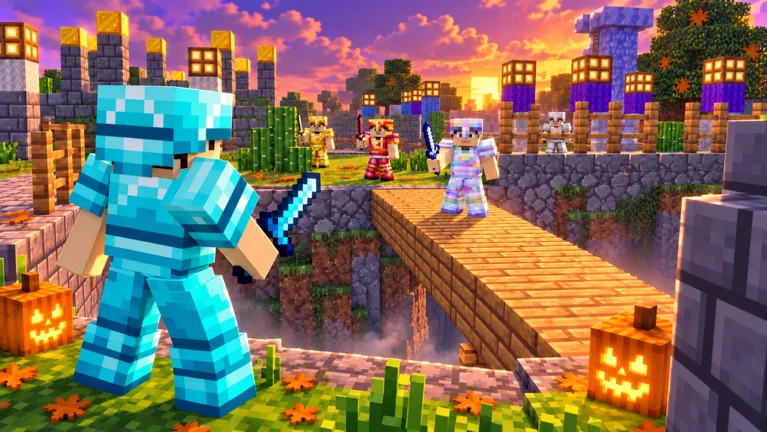
- 1 Upgrade Per Kill 1v1 challenge works best as a focused duel format built around fair target selection.
- Core rule: Each kill improves your current equipment, while death resets run-based upgrades.
- Best setup: Choose a class that matches your preferred range, movement, and duel timing.
- Main priority: Protect your upgrade progress instead of forcing every possible attack.
- Win condition: Secure the elimination, reassess your gear, and avoid turning a winning duel into a risky chase.
How the 1v1 Challenge Works
A 1v1 challenge in 1 Upgrade Per Kill is best treated as a controlled player-versus-player duel rather than an assumed separate official game mode. The official game description supports the central loop: eliminations improve equipment during a run, while death removes the upgrades built during that run. That reset makes every duel a decision about both damage and risk.
For a fair challenge, agree on the arena area, starting distance, class restrictions, and whether outside interference is allowed. If the duel takes place inside a normal free-for-all arena, nearby players can interrupt the fight, so both participants should recognize that the result may include third-party pressure.
| Challenge Rule | Recommended Standard | Why It Matters |
|---|---|---|
| Starting point | Same arena area or visible distance | Reduces surprise openings |
| Class choice | Same class or agreed class pool | Keeps the duel easier to compare |
| Outside players | No interference when possible | Prevents an uneven engagement |
| Gear state | Match upgrade level before the duel | Avoids equipment deciding the result alone |
| Victory | One confirmed elimination | Fits the game’s kill-to-upgrade loop |
| Rematch | Reset positions before starting again | Creates a cleaner comparison |
The most important rule is consistency. A duel between equally prepared players tests positioning, timing, crit awareness, knockback control, and retreat discipline. A duel between players with different upgrade levels can still be entertaining, but it should be labeled as an advantage match rather than a neutral test.
Death resets the upgrades gained during the current run. Do not treat a casual 1v1 as harmless if one failed exchange can erase several successful eliminations.
The official 1 Upgrade Per Kill Roblox game page is the best place to verify current systems, class availability, and live game information before setting challenge rules.
Choose a Duel Setup That Fits Your Style
A strong 1v1 setup should make your decisions clear. Direct fighters can focus on approach timing and close-range trades, while ranged or utility-focused classes demand more attention to spacing and terrain. The available class list includes Warrior, Archer, Trickster, Trapper, Skirmisher, Firestarter, Bomber, and Scorcher.
These roles should be used as practical starting points, not permanent rankings. A class that feels strong in open space may become less comfortable near the arena edge, and a class that rewards preparation may struggle when the opponent refuses to enter a predictable route.
Warrior
- Direct melee pressure
- Clear game plan
- Strong starting choice for close-range duel practice
Archer
- Controls distance
- Rewards accurate timing
- Useful for players who prefer measured engagements
Skirmisher
- Favors movement
- Supports short exchanges
- Good for players who disengage and reposition often
Trapper
- Uses preparation
- Controls routes and corners
- Best when the duel area has predictable movement paths
| Playstyle | Suitable Starting Classes | Primary Duel Skill |
|---|---|---|
| Direct melee | Warrior | Approach timing and close-range trades |
| Spacing and range | Archer | Distance control and accurate finishing |
| Hit-and-run | Skirmisher | Repositioning after each exchange |
| Ambush control | Trapper | Route prediction and setup discipline |
| Area pressure | Firestarter or Bomber | Forcing movement and denying safe space |
| Unpredictable attacks | Trickster | Timing, deception, and target reading |
| Aggressive close range | Scorcher | Closing distance without losing health |
For a first challenge, Warrior offers the clearest baseline because the duel centers on movement, attack timing, and positioning. Archer is a useful alternative when both players want to test spacing rather than immediate melee pressure. Advanced players can use Trickster, Trapper, or area-pressure classes once the arena rules are already understood.
Use the same class for both players during your first comparison. After that, repeat the duel with different classes to separate player skill from matchup advantages.
Perks and Enchants can also change the feel of a duel. New players should favor effects that support survival and reduce costly mistakes. Offensive choices become more valuable when you can already control distance, finish weakened targets, and retreat before a counterattack.
| Setup Element | Safer Choice | Riskier Choice |
|---|---|---|
| Class | Familiar, easy-to-control role | Specialized role with a narrow game plan |
| Upgrade goal | Protect the current tier | Chase the next fight immediately |
| Position | Open route with an escape option | Arena edge or enclosed corner |
| Perk focus | Survival and consistency | Pure offensive pressure |
| Duel pace | Short exchanges | Extended damage trades |
Step-by-Step 1v1 Challenge Flow
A repeatable flow makes the 1 Upgrade Per Kill 1v1 challenge easier to judge. Instead of rushing into combat, establish the conditions, identify the first safe opening, and reassess after every exchange. The method below works for both friendly practice and more competitive duel sessions.
Agree on the duel conditions
Decide whether both players use the same class, whether perks or enchants are allowed, and whether outside players can interfere. Confirm the starting area and the win condition before entering combat.
Match the starting advantage
Begin with comparable equipment or clearly announce the difference. If one player has reached a higher tier such as Diamond, Ruby, Shadow, or Prism, treat the result as an advantage match rather than a neutral test.
Read the opening movement
Watch the opponent’s first approach. Identify whether they prefer direct pressure, ranged spacing, edge control, or sudden repositioning. Do not spend health simply to start the fight quickly.
Take one controlled exchange
Attack when the opponent is committed, exposed, or moving through a predictable route. After the exchange, create distance and check your health, position, and escape route before attacking again.
Finish only with a clear advantage
Continue the duel when the opponent is vulnerable and your route remains safe. If the fight becomes uncertain, disengage and wait for a better opening instead of forcing a final hit.
| Duel Phase | Main Question | Correct Response |
|---|---|---|
| Opening | Who controls the first approach? | Hold a safe position and avoid blind chasing |
| First exchange | Did either player lose meaningful health? | Reset distance and reassess |
| Mid-duel | Is the opponent predictable? | Punish repeated routes or attack patterns |
| Finishing phase | Can the target be eliminated safely? | Commit only when the escape route remains usable |
| After the kill | Is the run now more valuable? | Protect the new upgrade and avoid unnecessary fights |
The kill itself is not the only measure of success. A clean duel leaves you in a position to continue progressing. A desperate elimination that leaves you exposed to another player may technically win the challenge while damaging the larger run.
The most reliable duel pattern is approach, controlled exchange, disengage, reassess, and finish. Repeating this cycle is safer than holding attack pressure without checking your position.
Duel Tactics: Spacing, Knockback, and Retreats
The game emphasizes crits, knockback, and armor interactions, so 1v1 success depends on more than selecting a class. Your position determines whether a hit creates an advantage or sends you into danger. The arena edge can help you pressure an opponent, but it can also remove your own escape options.
Keep enough space to react after every attack. If you stand directly against a boundary, a missed strike or counterattack can become much more dangerous. When fighting near an edge, use lateral movement and avoid committing to a long exchange unless you have a clear advantage.
| Situation | Better Decision | Common Mistake |
|---|---|---|
| Opponent is approaching directly | Wait for commitment, then counter | Attacking too early |
| Opponent is low health | Cut off the escape route carefully | Chasing into an exposed area |
| You are near the edge | Move toward open space | Continuing a trade with no retreat |
| Both players are damaged | Reset and force a better opening | Assuming the next hit is guaranteed |
| Opponent has stronger gear | Use positioning and timing | Taking a fair trade with weaker equipment |
| Another player enters nearby | Break line of sight or disengage | Treating a 1v1 as unchanged |
Use crit opportunities and knockback deliberately. A hit that forces the opponent into an unfavorable location may be more valuable than an attack that deals damage but leaves both players in the same position. Conversely, a failed knockback attempt can expose you to a counterattack.
Before Starting the Duel:
- Confirm the class and perk rules
- Match or announce the starting upgrade level
- Choose an arena area with an escape route
- Check for nearby players who could interrupt
- Agree on the elimination and rematch rules
When your health drops, change the objective from damage output to survival. Move away from the edge, break pursuit where possible, and avoid returning simply because the opponent is also weakened. A high-value run is often preserved by declining one uncertain exchange.
A low-health opponent is not automatically a safe target. If your approach exposes you to knockback, a third party, or a bad corner, retreat and wait for a clearer finish.
Gear Saver is most valuable when the current run contains meaningful progress, such as a long streak or a high equipment tier. It should not replace good positioning, and it is less urgent when you are carrying basic gear that can be rebuilt quickly.
Practice Goals and 1v1 Challenge FAQ
Use short practice sessions to isolate one skill at a time. A first session can test movement and spacing. A second can compare the same class with different upgrade levels. Later sessions can introduce perks, enchants, edge pressure, and bounty-style target selection.
| Practice Goal | What to Track | Improvement Signal |
|---|---|---|
| Safer openings | Health lost before first hit | Fewer reckless approaches |
| Better spacing | Distance after each exchange | More controlled resets |
| Edge control | Knockback attempts and escapes | Fewer self-traps |
| Finishing skill | Failed final attacks | More confident, lower-risk eliminations |
| Progress protection | Deaths after gaining upgrades | Fewer unnecessary resets |
Q: Is the 1 Upgrade Per Kill 1v1 challenge an official separate mode?
The available official description confirms the PvP arena and kill-based upgrade loop, but it does not establish a separate official 1v1 mode. Treat this challenge as an agreed duel format unless the live game page states otherwise.
Q: Which class should beginners use for a 1v1 challenge?
Warrior is a practical starting point because its direct melee role makes approach timing, movement, and retreat decisions easy to evaluate. Archer is another option for players who prefer distance.
Q: Should both players use the same equipment tier?
For a fair skill comparison, matching the starting tier is recommended. If the tiers differ, label the session as an advantage match because equipment progression can influence the outcome.
Q: When should I stop chasing an opponent?
Stop when your health is low, the route becomes exposed, the opponent reaches safer terrain, or another player enters the area. Protecting your current upgrade is usually better than forcing an uncertain elimination.
A strong 1v1 challenge rewards controlled engagements, clear rules, and disciplined retreats. Win the duel, then protect the progress that made the victory valuable.
For current class availability, live systems, and official announcements, check the Block PvP Roblox community alongside the official game page. Both links should be reviewed again before organizing a competitive challenge in 2026.