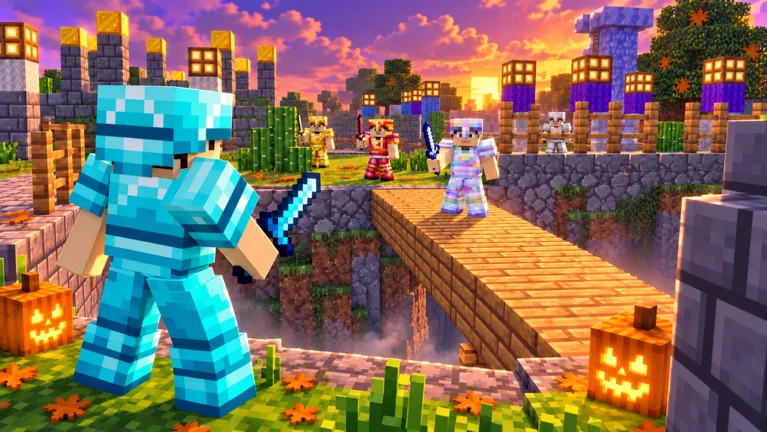
- Primary keyword: 1 Upgrade Per Kill upgrade path from Leather to MAXED
- Core mechanic: Each elimination advances your current equipment during the run
- Main risk: Death resets the upgrades gained during that run
- Best habit: Choose favorable fights and keep an escape route available
- Late-game rule: Protect Prism and MAXED progress before chasing low-value targets
1 Upgrade Per Kill upgrade path Overview
The 1 Upgrade Per Kill upgrade path rewards controlled eliminations while making every death costly. The listed progression runs from Leather through Copper, Iron, Full Diamond, Ruby, Shadow, Prism, and MAXED. Your goal is not simply to fight constantly; it is to convert safe kills into stronger equipment and protect that progress when the risk becomes unfavorable.
The official Roblox game page describes a free-for-all PvP arena built around kill-based upgrades, classes, perks, enchants, bounties, crates, capes, and leaderboards. Use the upgrade stage as a decision tool: early levels help you establish momentum, while high levels demand better target selection and retreat timing.
| Stage | Primary Goal | Risk Level | Recommended Focus |
|---|---|---|---|
| Leather | Secure the first kill | Low | Learn movement and find isolated targets |
| Copper | Build early momentum | Low to medium | Take favorable fights without extended chases |
| Iron | Establish a reliable baseline | Medium | Watch for players targeting your improved gear |
| Full Diamond | Reach a strong breakpoint | Medium to high | Stop forcing low-value engagements |
| Ruby | Extend a strong streak | High | Keep moving and choose clean finishes |
| Shadow | Control high-value fights | High | Use information, distance, and escape routes |
| Prism | Protect elite progress | Very high | Avoid crowded fights and uncertain pursuits |
| MAXED | Preserve the completed run | Very high | Take only high-confidence eliminations |
Your equipment advantage matters most when it changes which fights are safe. Do not treat an upgrade as permission to chase every opponent.
Upgrade Priorities and Combat Decisions
Each stage changes the value of combat. At Leather and Copper, taking measured fights helps you learn the arena without risking a large amount of progress. At Full Diamond and above, the same reckless chase can erase several successful eliminations. Match your aggression to the cost of dying.
Early Run
- Target isolated players
- Learn class range and movement
- Avoid crowded engagements
- Keep a route to retreat
Mid Run
- Reassess after every kill
- Prefer damaged or distracted targets
- Avoid predictable rotations
- Protect the next upgrade
Late Run
- Choose high-confidence fights
- Disengage from bad matchups
- Watch for ambushes and knockback
- Value survival over extra kills
| Situation | Better Decision | Why It Works |
|---|---|---|
| Two opponents are fighting nearby | Wait for a clear finishing opportunity | Reducing exposure lowers the chance of a third-party death |
| You are low health after a kill | Break pursuit and reposition | A second fight can reset valuable progression |
| A high-upgrade player is isolated | Engage only with a clear advantage | The target may be valuable but is likely prepared |
| You are near the arena edge | Move toward safer space before trading | Limited movement increases knockback risk |
| Your class has a range advantage | Maintain spacing and force reactions | Distance can create safer finishing windows |
Death removes the upgrades gained during the current run. A low-probability chase is usually worse than preserving your existing stage and waiting for a better opening.
Step-by-Step Route to MAXED
Choose a clear combat role
Start with a class that matches your comfort level. Warrior offers a direct melee plan, Archer supports ranged pressure, while Trapper, Bomber, and Firestarter reward preparation and area control.
Secure the first safe elimination
Search for isolated or weakened opponents rather than entering a group fight. Use cover, monitor nearby players, and keep an escape route before committing.
Convert the kill into a stage advantage
After each elimination, reassess your equipment, health, position, and nearby threats. Stronger gear should improve your choices, not remove the need for caution.
Change tactics at Full Diamond
Full Diamond is a meaningful mid-run breakpoint. Reduce unnecessary chases, prioritize controlled engagements, and avoid fighting in areas where multiple players can collapse on you.
Protect Ruby through Shadow
High-stage players attract attention. Keep moving, avoid predictable routes, and use class strengths to finish targets quickly before another opponent joins the fight.
Treat Prism and MAXED as protected progress
At the highest stages, survival has greater value than an uncertain elimination. Retreat from poor matchups, avoid crowded battles, and only continue when you retain control of the engagement.
| Checkpoint | Question to Ask | Action |
|---|---|---|
| After first kill | Do I have health and an escape route? | Reposition before starting another fight |
| At Iron | Who can punish my current route? | Watch nearby players and avoid predictable movement |
| At Full Diamond | Is this target worth the reset risk? | Skip uncertain chases |
| At Ruby or Shadow | Can I finish without being surrounded? | Use a clean approach and disengage early |
| At Prism or MAXED | Does this fight improve the run? | Take only high-confidence engagements |
The safest route to MAXED is repeatable: isolate a target, secure the elimination, reassess your position, and withdraw when the next fight loses its advantage.
Perks, Gear Saver, and Streak Protection
Perks and Enchants should support the way you actually fight. New players generally gain more from consistent survival and mistake reduction than from narrow offensive effects. Once your positioning and retreat timing improve, offensive options become more valuable for finishing vulnerable targets.
Gear Saver is most useful when the current run contains meaningful progress. It is less urgent at Leather than at Shadow, Prism, or MAXED because replacing basic early equipment costs less than rebuilding a long streak.
| Resource | Best Use | Timing | Common Mistake |
|---|---|---|---|
| Perks | Broad combat or survival improvements | Early and throughout a run | Buying a narrow effect before fixing positioning errors |
| Enchants | Focused combat efficiency | When your playstyle is established | Expecting extra offense to solve poor target selection |
| Gear Saver | Protecting valuable progress | High upgrade stages or long streaks | Using it on ordinary early equipment |
| Gold | Practical upgrades and progression | Regularly during normal play | Spending too early on low-impact purchases |
| Emeralds | Rare or high-value purchases | After comparing future options | Using a limited resource immediately |
Before Your Next Fight:
- Check your current upgrade stage and health
- Identify an isolated, weakened, or distracted target
- Keep an escape route away from the arena edge
- Decide whether Gear Saver is worth protecting this progress
- Reassess after every successful elimination
Gear Saver supports risk management, but it does not replace positioning. Retreating before a losing fight remains an important way to preserve the 1 Upgrade Per Kill upgrade path.
Upgrade Path FAQ and Final Tips
Use the official Roblox game page for the current game entry and the Block PvP Roblox community for official announcements. Class strength can depend on map position, player skill, and the specific matchup, so treat rankings as practical guidance rather than fixed guarantees.
Q: What is the 1 Upgrade Per Kill upgrade path?
It is the run-based equipment progression from Leather to Copper, Iron, Full Diamond, Ruby, Shadow, Prism, and MAXED. Each successful elimination advances the run, while death resets its upgrades.
Q: What should I do after reaching Full Diamond?
Shift from constant fighting to controlled engagements. Avoid low-value chases, monitor third-party threats, and choose targets that can be finished without exposing your current progress.
Q: When should I use Gear Saver?
Gear Saver is more valuable when you have a long streak or high-level equipment. At low stages, saving the resource is often more efficient because basic progress is easier to rebuild.
Q: Which class is easiest for learning the upgrade route?
Warrior offers the clearest direct-combat plan, while Archer is useful for players who prefer spacing. Utility classes can be effective but usually require more positioning and timing practice.
The strongest upgrade run combines safe target selection, deliberate movement, and timely retreats. Build momentum one elimination at a time, then protect it when the reset cost becomes high.